Hi, you may be reading this because I have sent you a Christmas card in 2025 containing a spider plant.
Firstly, you do not have to keep this spider plant! If you are not a houseplant person please feel free to throw it away. Secondly, if you are a house plant person, you probably don't need my advice.
But if you would like to see if you can grow your new spider plant, but have no idea how to do so, all this text is for you! This is a guide for spider plant propagation.
STEP 0 - Taking a cutting
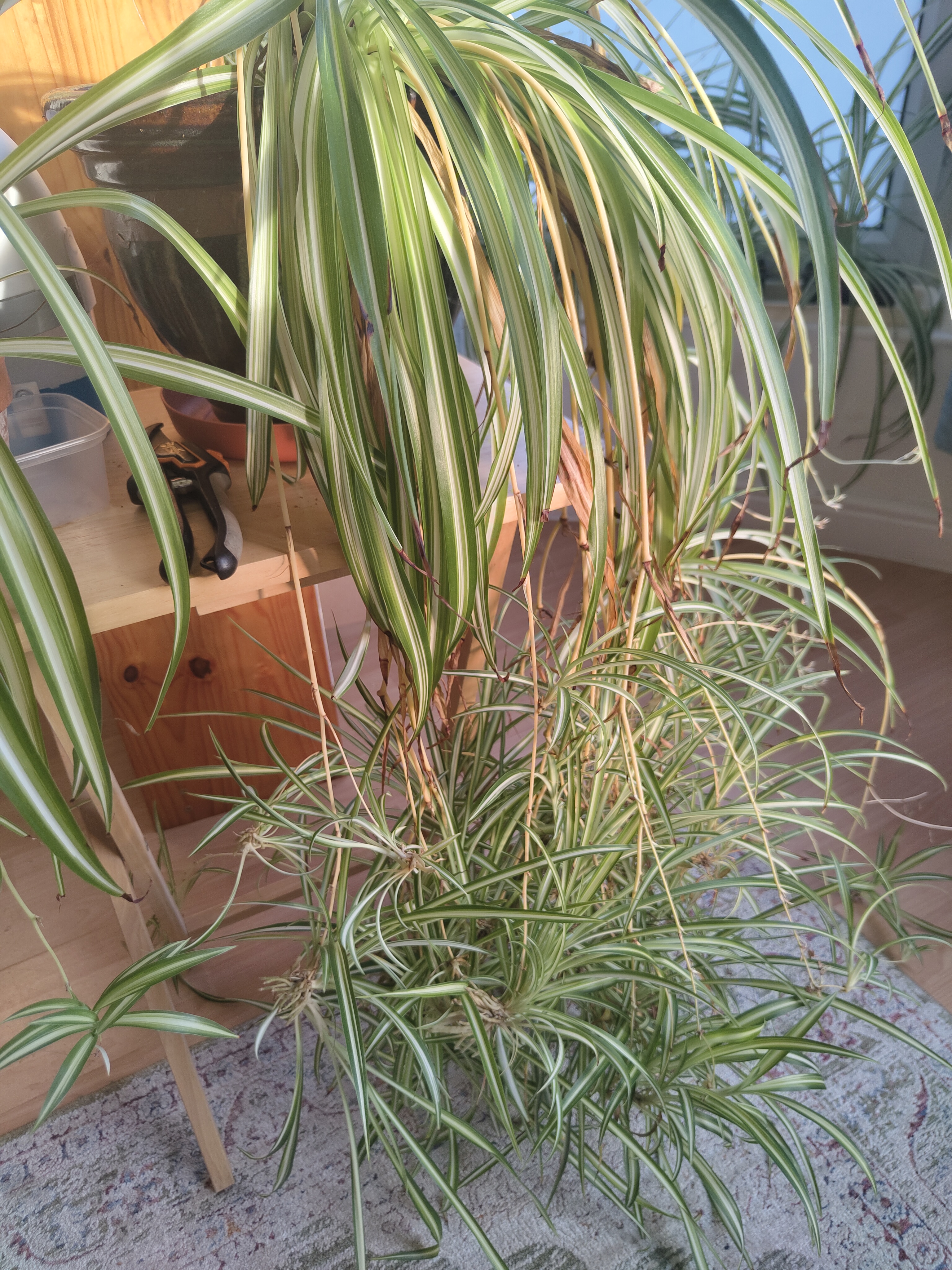
I did this already! Spider plants are straightforward to take cuttings of because they stretch out offshoots called "spiderettes". Here's a picture of my big spider plant before I took your cutting from it.
STEP 1 - Identifying your plant
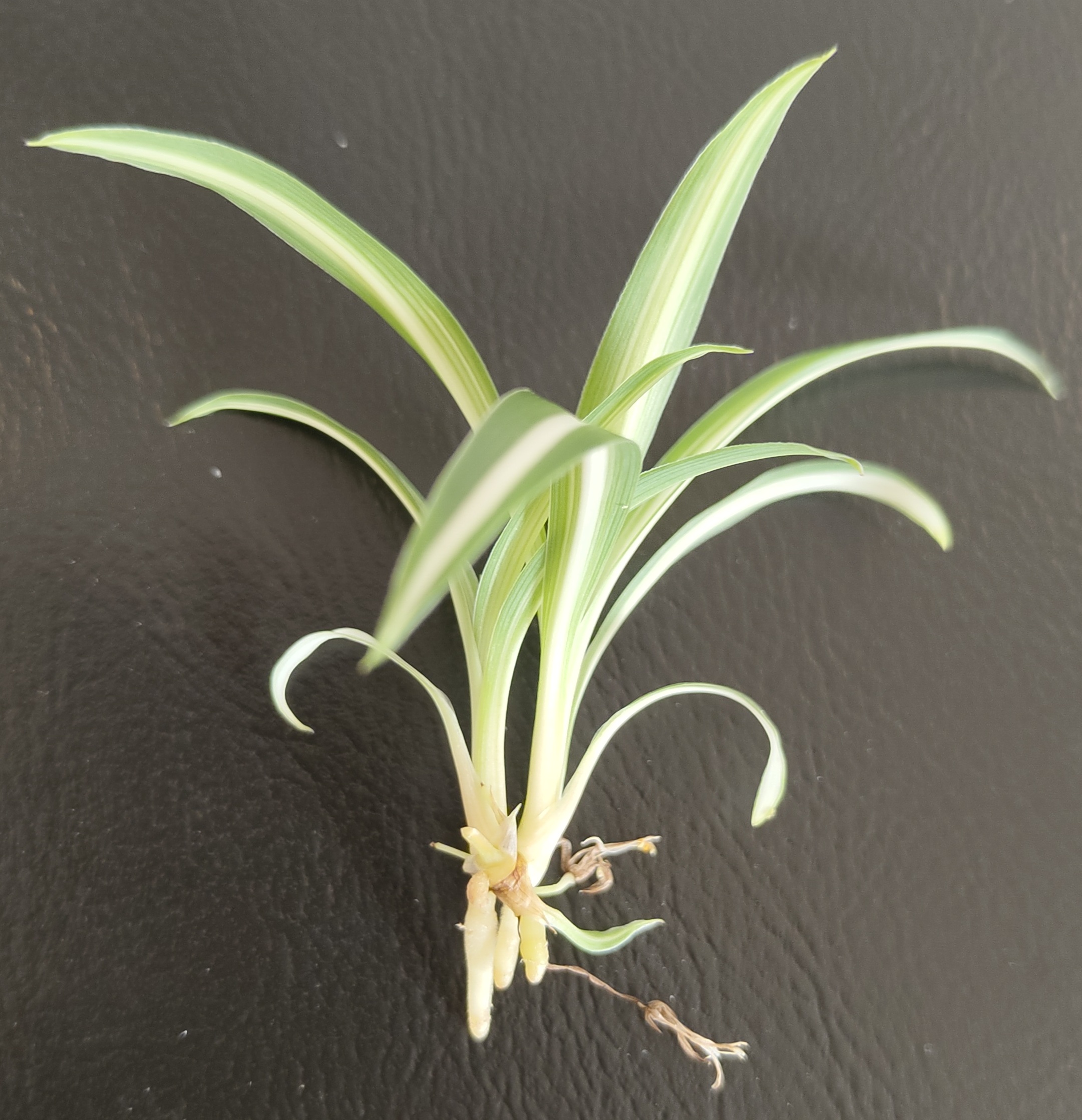
Your spider plant will have some leaves at the top and some roots at the bottom. The roots will be white nodules, they might be short or long.
STEP 2 - Short term care
Get that plant some water quickly, balancing the spider plant in a cup of water. The roots have to be in the water! Ideally keep the leaves out of the water. Place the plant somewhere it can get some natural light, by a window ideally.
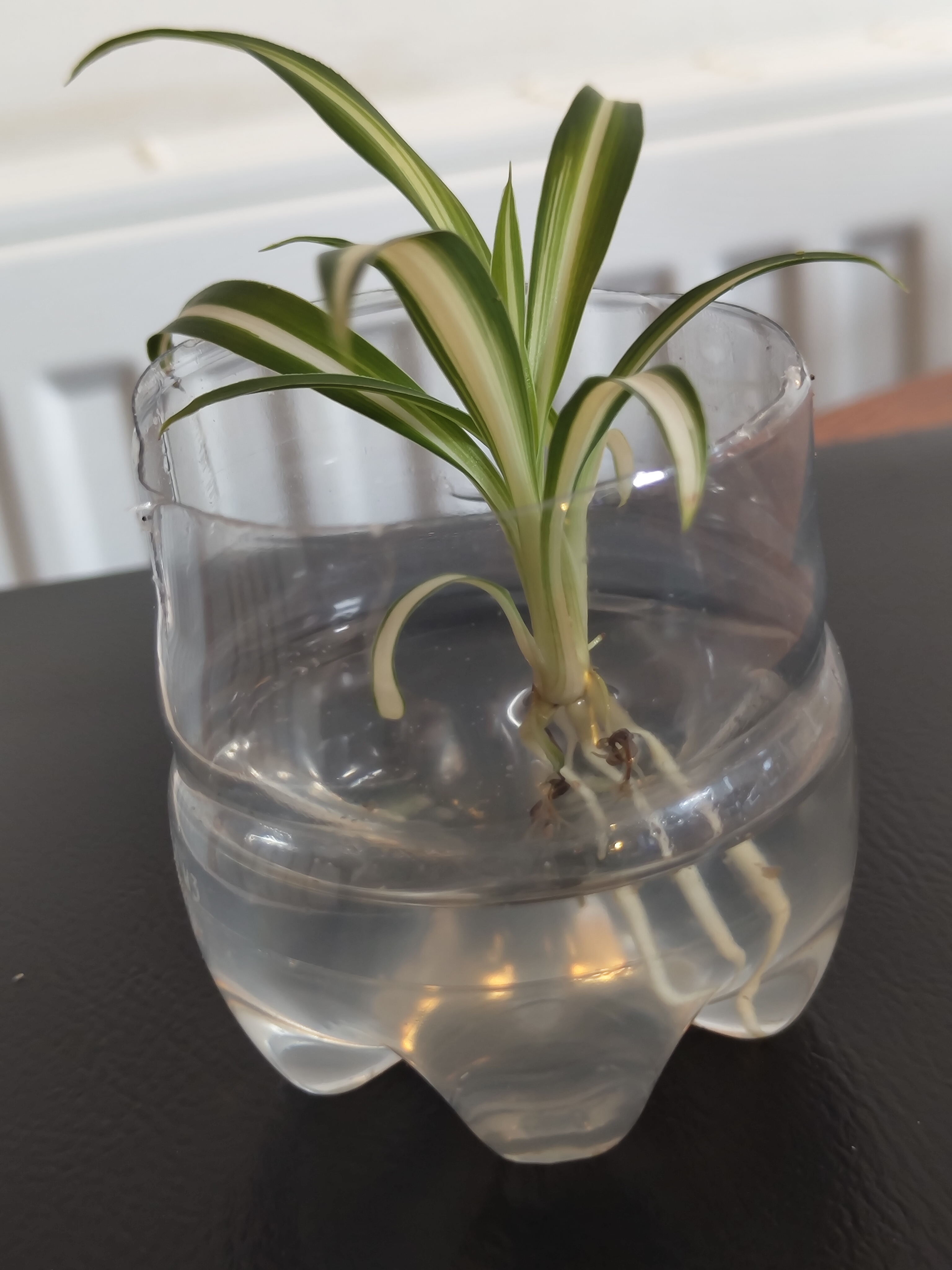
If you don't want to devote a cup to it, you can use a jar or bottle. I've cut off the bottom of a plastic bottle with a breadknife and that's where mine's sitting.
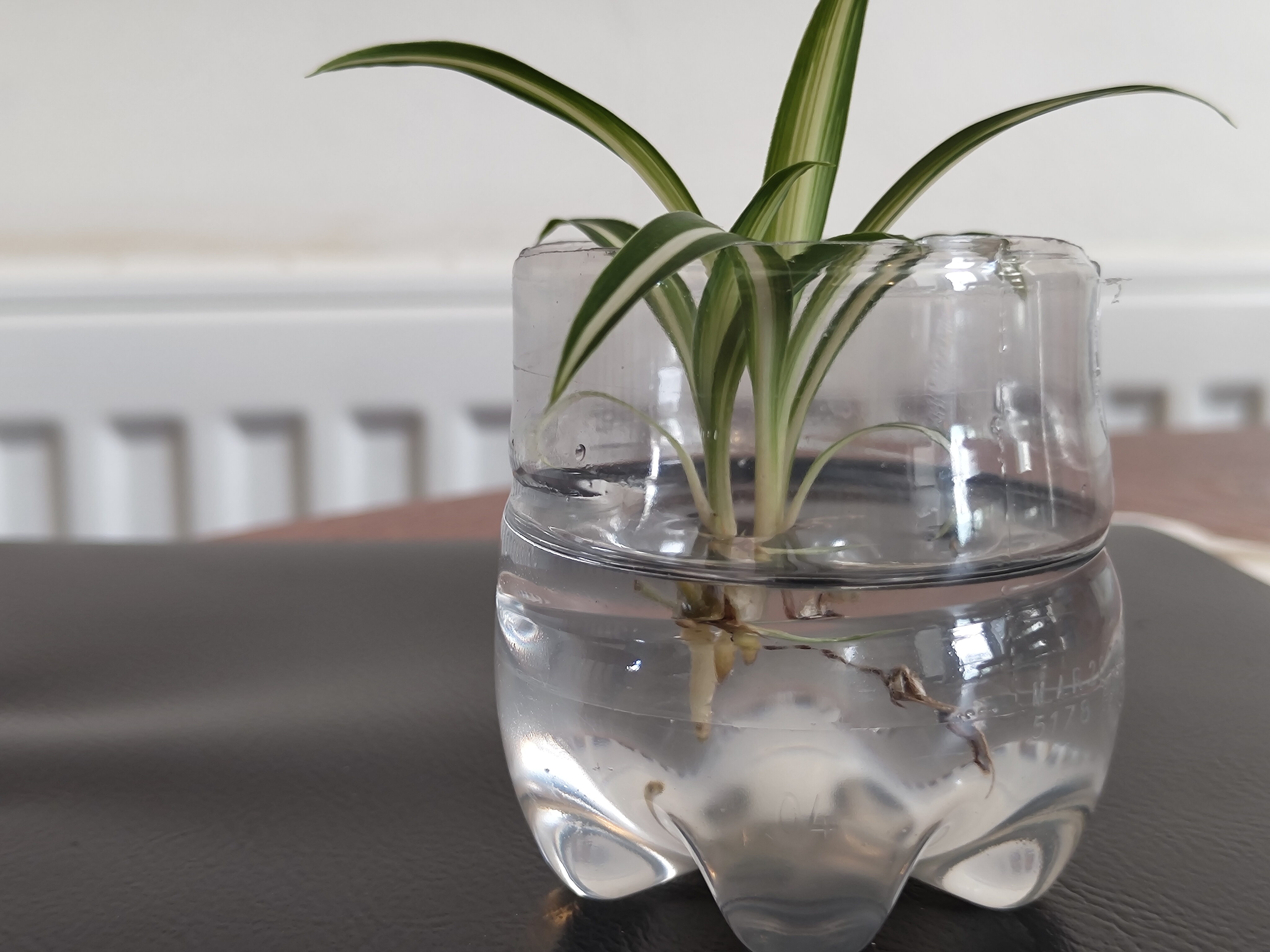
I have no idea how long the spider plant can be in the water, but it's no rush. You should see the roots begin to grow! Here's my example plant after one week.
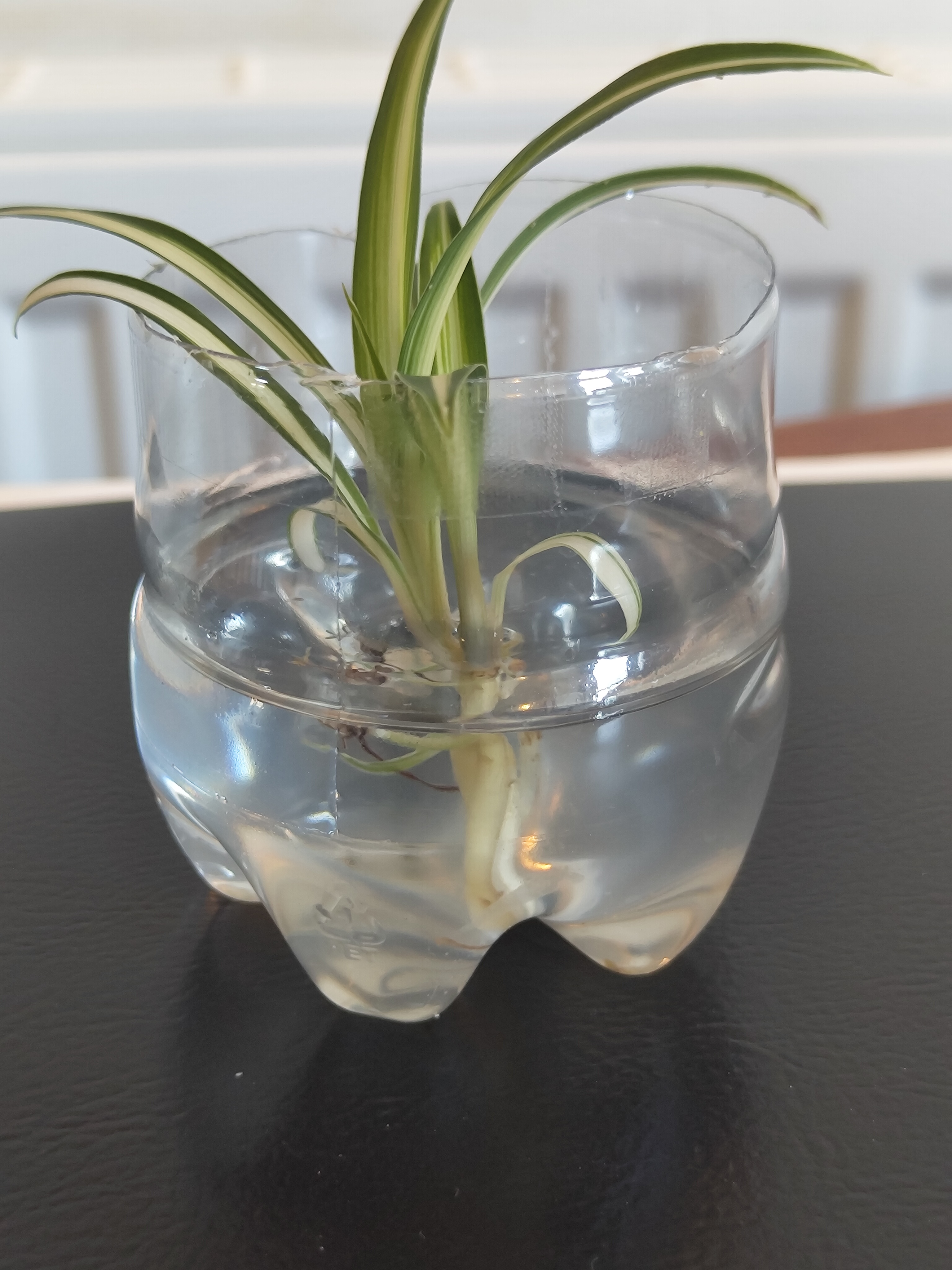
And then the same plant again after two weeks. Your mileage may vary since I put this plant straight in water, and yours will have been squashed in a card for a few days.
STEP 3 - Put it in soil
The ideal set up, once you've confirmed your spider plant isn't dead and is growing roots, would be a plant pot that's not absurdly big filled with compost. Make a hole in the compost, set the spider plant's roots in that gap, then bury the roots while keeping the leaves above the soil.
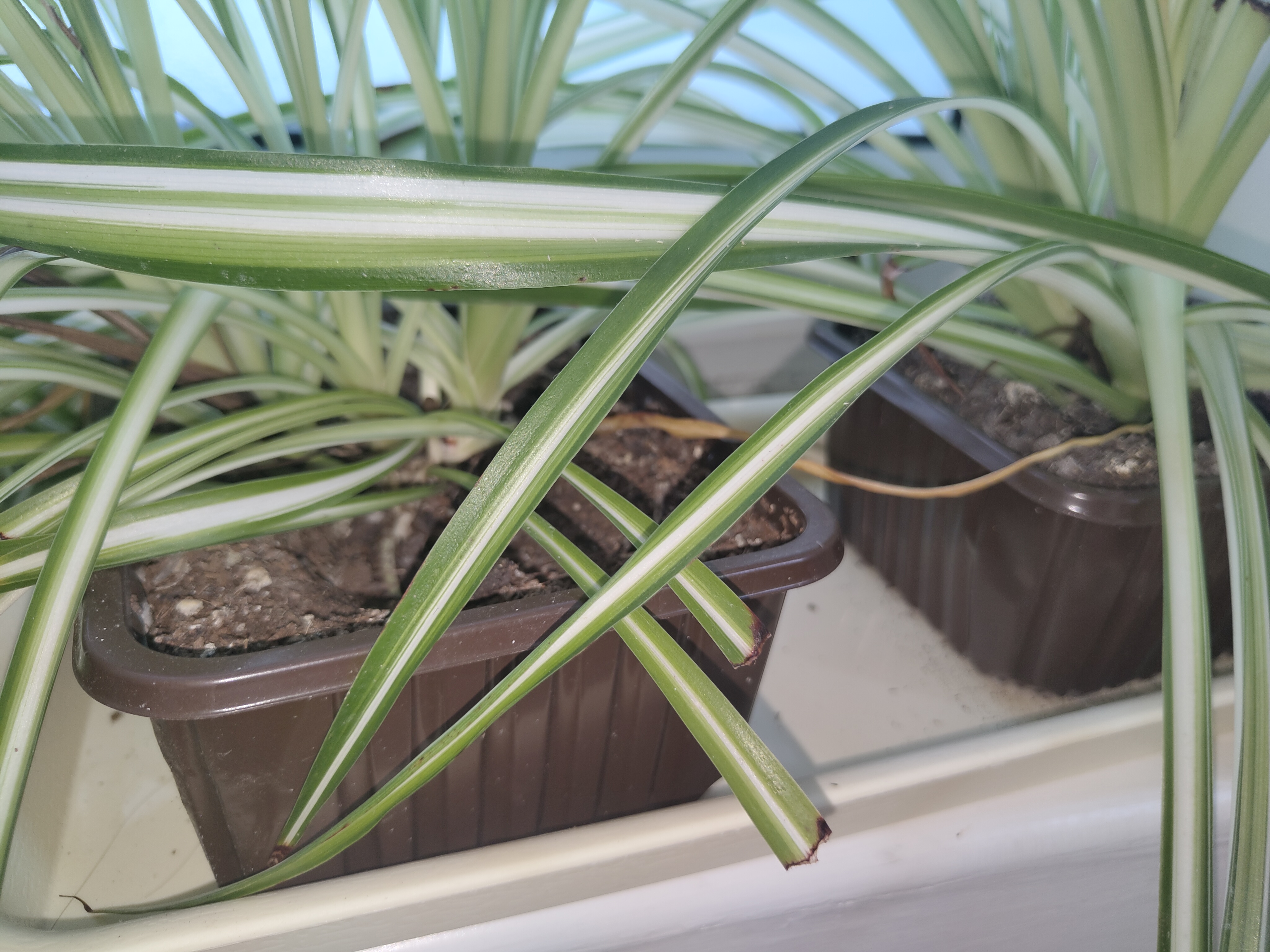
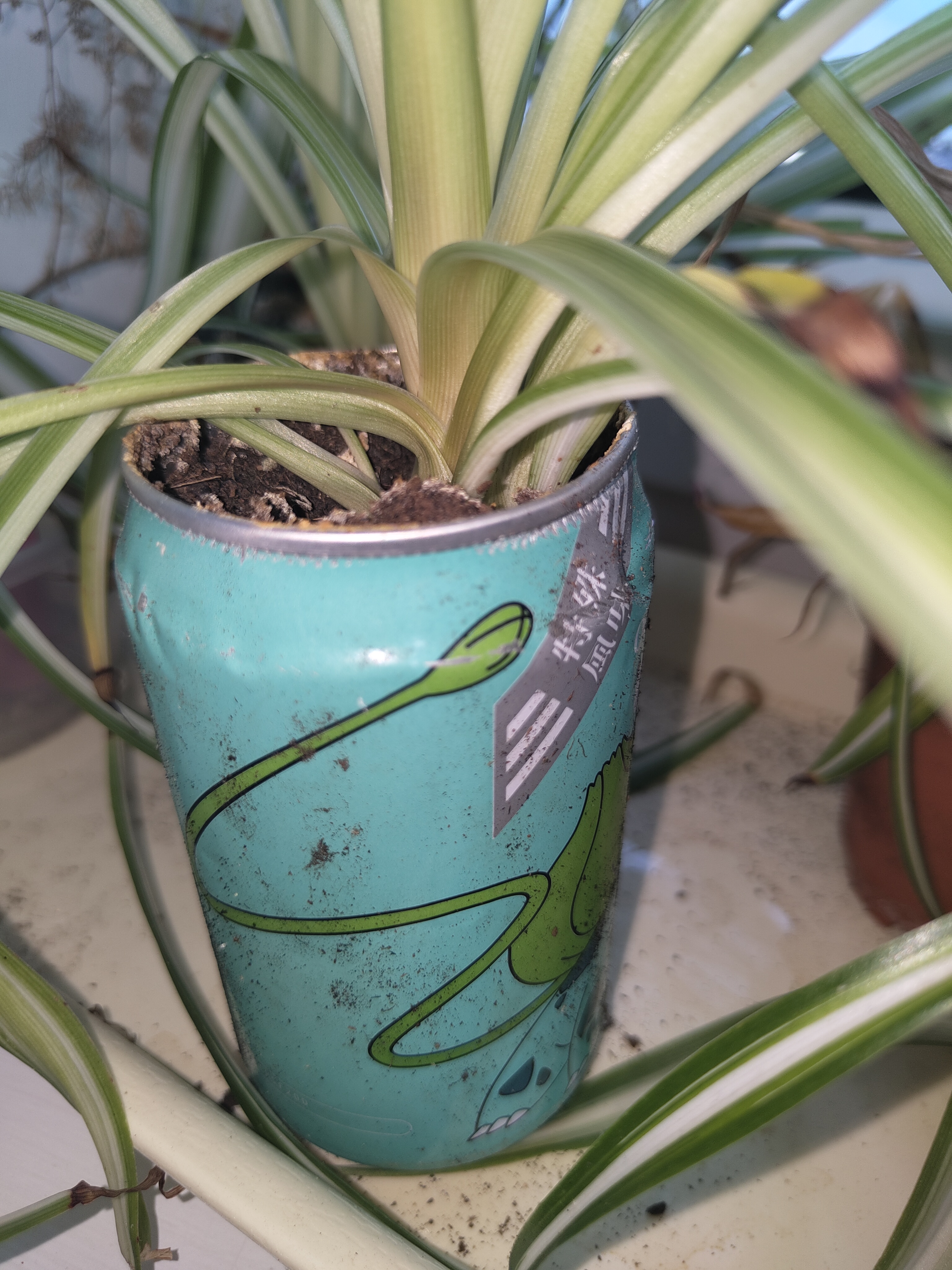
If you don't have a plant pot, a plastic bottle or vegetable container would do. I'm also using a can! The main thing is ideally to poke holes in the bottom of the container, so that if you overwater the plant the excess drains out instead of staying waterlogged and causing the roots to rot. Here are some of my examples.
So the ideal is houseplant potting soil, but buying a bag will give you much more than you need. I will leave this challenge to you—perhaps you know someone who has plants and could spare a cup of soil. Perhaps you could use soil lifted from a park, but this might kill the spider plant and invite flies and other bugs into your home. I wish you the best.
STEP 4 - The future
You should only need to water your spider plant once every couple of weeks at first, but in summer especially a weekly schedule is good. The plant won't tell you when it needs watering, but the soil will! Water if the soil is dry.
Let me know how you get on, it's a fun experiment and thanks for taking part.